The short answer: yes, and significantly
Semaglutide is the most effective non-surgical weight loss intervention in the history of clinical medicine. That's not marketing language — it's the consensus of obesity medicine researchers based on the STEP trial results, which showed average weight loss of approximately 15% of body weight over 68 weeks. No prior medication had achieved results anywhere close to this consistently.
But "does it work" has important nuance. It works very well for most people who qualify and use it correctly. It works less well for some. And it stops working when you stop taking it. Here's the complete picture.
Numbers convinced you already?
A licensed physician at DirectMeds can tell you within about 10 minutes whether semaglutide is a fit for your specific situation.
Check your eligibility — free →What the clinical trials actually show
The STEP (Semaglutide Treatment Effect in People with obesity) trial program is the most comprehensive evidence base for semaglutide's weight loss effects. The trials enrolled thousands of adults with obesity or overweight with weight-related health conditions across multiple countries and ran for 68 weeks.
Key findings across the STEP trials:
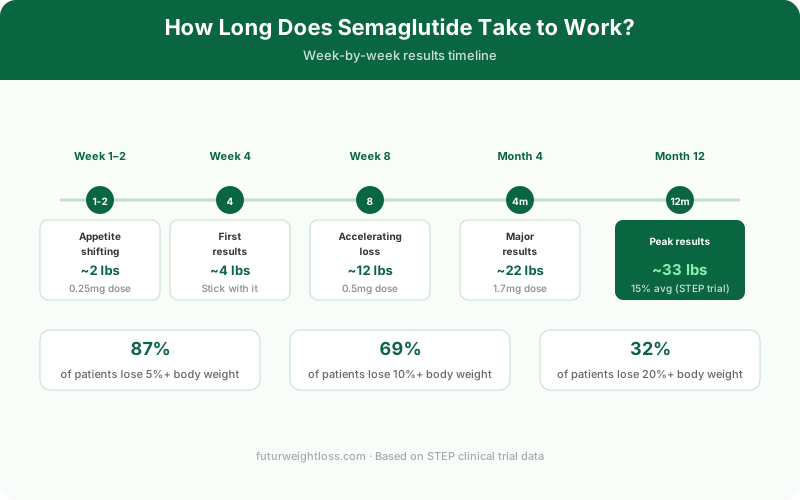
- Average weight loss of ~15% of body weight — roughly 15 kg (33 lbs) for a 100 kg (220 lb) person
- 87% of patients lost at least 5% of body weight, compared to 31% on placebo
- Nearly 70% of patients lost at least 10% of body weight
- About 1 in 3 patients lost 20% or more
- Weight loss was maintained throughout the treatment period with continued medication use
- Significant improvements in blood pressure, blood sugar, cholesterol, and inflammatory markers alongside weight loss
These results are dramatically better than any prior weight loss medication. For context, most previously approved weight loss drugs produced average weight loss of 3–7%. Semaglutide at 15% average represents a fundamental shift in what's clinically achievable without surgery.
How semaglutide works — the mechanism behind the results
Semaglutide is a GLP-1 receptor agonist. GLP-1 (glucagon-like peptide-1) is a hormone your gut naturally releases after eating. It signals to your brain that you've eaten, reduces appetite, slows gastric emptying so food stays in your stomach longer, and lowers blood sugar by stimulating insulin release.
Semaglutide mimics this hormone at much higher concentrations than your body naturally produces. The result is a sustained reduction in appetite and food intake that most patients describe not as willpower — but as the mental noise around food simply quieting down. Cravings for highly palatable foods (sugar, alcohol, processed foods) also appear to decrease through pathways that aren't fully understood but are consistently reported.
This mechanism is why semaglutide works when dieting doesn't for so many people. Obesity has a strong neurobiological component — hunger hormones and brain reward systems actively resist weight loss. Semaglutide works at the hormonal level to change the underlying biology, not just tell people to eat less.
How long does it take to work?
- 1Weeks 1–4 (starting dose: 0.25mg)Most patients notice reduced appetite within the first 1–2 weeks. Food noise decreases. Portions naturally reduce. Weight loss of 1–3 lbs is typical at this stage. GI side effects (nausea, sometimes vomiting) are most common now as the body adjusts.
- 2Weeks 5–16 (dose titration to 0.5mg–1mg)Appetite suppression strengthens as dose increases. Weight loss accelerates — typically 1–2 lbs per week for many patients. GI side effects usually ease as the body adjusts to each dose level. Energy may initially dip as calorie intake drops significantly.
- 3Weeks 17–36 (titrating toward 2.4mg maintenance)Continued weight loss, typically at 0.5–1.5 lbs per week. Many patients reach the 10% body weight loss milestone in this window. Non-scale victories become apparent — improved energy, better sleep, reduced joint pain.
- 4Weeks 36–68 (maintenance dose)Weight loss typically slows and plateaus as a new equilibrium is reached. The STEP trials showed average 15% loss by week 68. Some patients continue losing beyond this point; others maintain their achieved loss.
- 5Beyond 68 weeksWeight is largely maintained with continued medication use. Stopping semaglutide typically results in gradual weight regain over 12–18 months as appetite returns to baseline — a key consideration for long-term treatment planning.
Who does semaglutide work best for?
Works best for
- Adults with BMI 30+ who have struggled to lose weight through diet/exercise
- People with strong food cravings or "food noise" driving overeating
- Those with insulin resistance or prediabetes (semaglutide improves both)
- Patients willing to commit to ongoing treatment — not a short-term fix
- People who pair medication with improved diet and activity habits
Works less well or is not appropriate for
- People expecting results without any dietary changes — it reduces appetite, but diet quality still matters
- Those who cannot tolerate GI side effects even at low doses
- People with personal/family history of certain thyroid conditions (contraindicated)
- Anyone expecting permanent results after stopping — weight typically returns
- Patients without a plan for long-term access and cost management
What happens when you stop taking it?
This is the most important thing to understand about semaglutide — and the most frequently glossed over in coverage of these medications. The STEP 4 withdrawal trial showed that patients who stopped semaglutide after achieving significant weight loss regained approximately two-thirds of their lost weight within one year.
This isn't a failure of the medication — it's a reflection of the biology of obesity. Semaglutide suppresses the hunger hormones that drive weight regain. When you stop the medication, those hormones return to baseline, and so does weight over time in most patients.
What this means practically: most obesity medicine specialists now view semaglutide as a long-term or indefinite treatment for appropriate candidates, similar to blood pressure medication. Patients who respond well should plan for ongoing treatment and factor the monthly cost into their decision-making — which is one reason why affordable compounded options are so important.
Does compounded semaglutide work as well as brand-name?
Yes — because the active ingredient is the same molecule at equivalent doses. Semaglutide's weight loss effects come from its action on GLP-1 receptors in the brain and gut. That mechanism doesn't change based on whether the semaglutide was manufactured by a pharmaceutical company or compounded by a licensed pharmacy.
See our full Wegovy vs compounded semaglutide comparison for a detailed breakdown of the differences and when each makes sense.
Find out if semaglutide is right for you
A licensed physician at DirectMeds will review your health history and determine whether semaglutide is appropriate for your situation. Free eligibility check — takes under 10 minutes.
Check your semaglutide eligibility — free →