The short answer: they're the same drug at different doses
Ozempic and Wegovy both contain semaglutide — the exact same active molecule manufactured by Novo Nordisk. The difference is regulatory approval and maximum dose. Ozempic is approved for type 2 diabetes at doses up to 2mg weekly. Wegovy is approved specifically for chronic weight management at a higher maximum dose of 2.4mg weekly.
The higher Wegovy dose produces slightly better average weight loss than Ozempic's approved doses — about 15% body weight at 2.4mg versus 12–13% at lower doses. But in practice, many physicians prescribe Ozempic off-label at doses up to 2mg for weight loss, achieving results close to Wegovy at a similar or lower price point.
Head-to-head comparison
| Factor | Ozempic | Wegovy |
|---|---|---|
| Active ingredient | Semaglutide | Semaglutide (identical) |
| Manufacturer | Novo Nordisk | Novo Nordisk |
| Primary approval | Type 2 diabetes | Chronic weight management |
| Maximum approved dose | 2mg weekly | 2.4mg weekly |
| Average weight loss | ~12–13% body weight | ~15% body weight (at 2.4mg) |
| Monthly cost (no insurance) | ~$900–$1,000 | ~$1,000–$1,100 |
| Insurance coverage | Often covered for diabetes | Limited for weight loss |
| Off-label weight loss use | Widely prescribed | Not applicable — on-label |
| Pen device | FlexTouch pen | Different pen device |
When Ozempic makes more sense than Wegovy
Ozempic is the better choice when you have type 2 diabetes and your insurance covers it — the coverage for diabetes is broader and more reliable than weight loss coverage. At lower doses (0.5–1mg), Ozempic is also appropriate for patients who want to start conservatively and assess tolerance before committing to higher doses. Some physicians find Ozempic easier to titrate for certain patients.
When Wegovy makes more sense than Ozempic
Wegovy is the on-label choice for weight loss without diabetes. The 2.4mg maximum dose produces slightly better weight loss outcomes than the doses available with Ozempic. If you have insurance that covers Wegovy for weight management — becoming more common as employer plans expand coverage — and your copay is manageable, it's the appropriate branded choice.
Why compounded semaglutide is what most people actually use
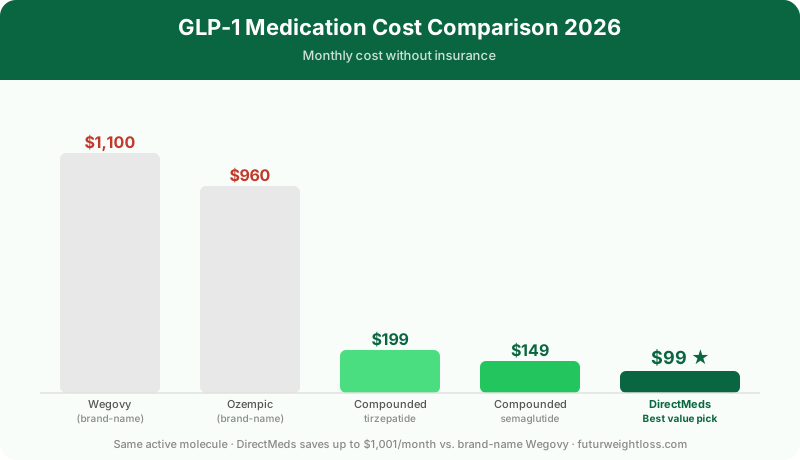
The practical reality: most people seeking GLP-1 therapy for weight loss don't have insurance that works for either Ozempic or Wegovy. Without insurance coverage, both cost $900–$1,100/month — prices that make long-term treatment financially impossible for most patients.
Compounded semaglutide from a licensed pharmacy, prescribed by a telehealth physician, contains the identical active molecule at equivalent doses — for $99–$249/month. The clinical outcomes are the same because the drug doing the work is chemically identical. This is why compounded semaglutide has become the dominant access route for GLP-1 therapy in 2026.
See our full Wegovy vs compounded semaglutide comparison for the detailed breakdown.
Access semaglutide for $99/month
Same active molecule as Ozempic and Wegovy. Real physician oversight. Ships to all 50 states.
Check eligibility at DirectMeds →