The short answer
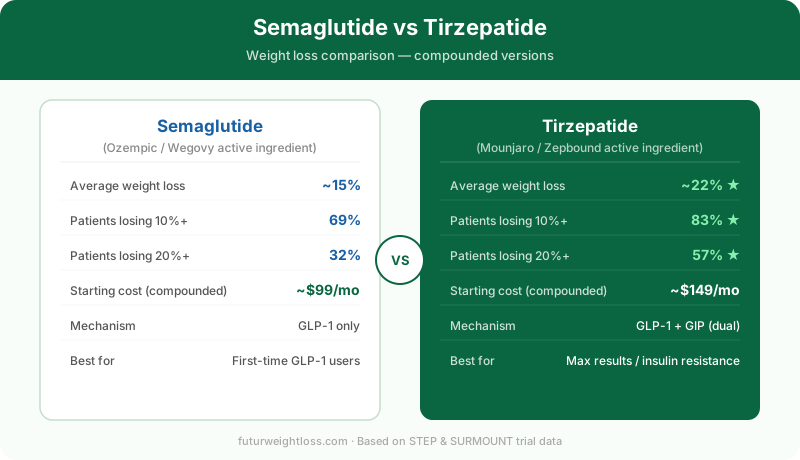
Tirzepatide produces more weight loss on average — clinical trials show roughly 20–22% of body weight versus 15% for semaglutide. But semaglutide is more established, has a longer safety track record, costs less, and works very well for the majority of patients. Tirzepatide's superiority on weight loss comes with a higher price tag and slightly less long-term data.
For most people starting GLP-1 therapy for the first time, semaglutide is the pragmatic starting point. For people who have tried semaglutide and want to step up — or who want to maximize weight loss from the start — tirzepatide is worth the premium.
How they work — and why it matters
Both medications are injected once weekly and work by mimicking hormones your body naturally produces after eating. But they target different receptors:
Semaglutide is a GLP-1 receptor agonist. GLP-1 (glucagon-like peptide-1) is a hormone released by the gut after eating. It signals fullness to the brain, slows gastric emptying so food stays in the stomach longer, and reduces appetite. Semaglutide mimics this hormone at much higher concentrations than the body naturally produces, creating a sustained appetite-suppressing effect.
Tirzepatide is a dual GIP/GLP-1 receptor agonist — it activates both the GLP-1 receptor and the GIP (glucose-dependent insulinotropic polypeptide) receptor. GIP is another gut hormone that plays a role in insulin secretion, fat metabolism, and appetite regulation. Activating both pathways simultaneously produces a stronger combined effect than either alone, which explains tirzepatide's superior weight loss outcomes in clinical trials.
Head-to-head: clinical trial results
| Metric | Semaglutide (STEP trials) | Tirzepatide (SURMOUNT trials) |
|---|---|---|
| Average weight loss | ~15% body weight | ~20–22% body weight |
| Patients losing 20%+ | ~32% | ~57% |
| Patients losing 5%+ | ~87% | ~91% |
| Blood sugar reduction | Significant | Greater reduction |
| Cardiovascular outcomes data | Strong (SELECT trial) | Growing data |
| Years of safety data | More established | Newer, less long-term data |
| Brand-name cost/month | ~$900–$1,100 | ~$1,000–$1,300 |
| Compounded cost/month | ~$99–$199 | ~$149–$299 |
Side effects — how do they compare?
Both medications share a similar side effect profile because they both activate the GLP-1 receptor. The most common side effects are gastrointestinal:
- Nausea — most common, especially in the first weeks. Typically improves as your body adjusts and dose is titrated slowly
- Vomiting — less common, often triggered by eating too fast or too much
- Diarrhea or constipation — both occur; staying hydrated and eating fiber helps
- Reduced appetite — technically an intended effect, but can feel extreme for some patients
Tirzepatide shows slightly lower rates of nausea in clinical trials compared to semaglutide at comparable weight loss doses — potentially due to the GIP component moderating some of the GLP-1-driven GI effects. In practice, both medications are well-tolerated by most patients who titrate doses slowly.
Both carry the same serious risk warnings: rare but possible thyroid tumors (contraindicated with personal/family history of medullary thyroid carcinoma), pancreatitis, and gallbladder disease. Your physician will screen for these during intake.
Cost comparison in 2026
This is where the compounded telehealth market has genuinely transformed access to these medications:
| Option | Semaglutide | Tirzepatide |
|---|---|---|
| Brand-name (no insurance) | $900–$1,100/mo | $1,000–$1,300/mo |
| Brand-name (with insurance) | Varies — often denied | Varies — often denied |
| Compounded telehealth (starting dose) | ~$99–$149/mo | ~$149–$199/mo |
| Compounded telehealth (maintenance dose) | ~$149–$249/mo | ~$199–$299/mo |
Semaglutide remains the more affordable option at every price point. For patients primarily motivated by cost, semaglutide's lower compounded pricing — combined with strong clinical efficacy — makes it the clear pragmatic choice.
Which should you choose?
Choose semaglutide if...
- You're starting GLP-1 therapy for the first time
- Cost is a primary consideration
- You want the most established long-term safety data
- You have cardiovascular disease (SELECT trial data)
- Your physician recommends starting conservatively
Choose tirzepatide if...
- You want to maximize weight loss potential
- You've tried semaglutide with limited results
- You have type 2 diabetes alongside obesity
- You can absorb the higher monthly cost
- Your physician recommends it based on your health profile
The bottom line
Tirzepatide is the more powerful medication for weight loss. Semaglutide is the more established, more affordable, and still highly effective option. Neither is universally "better" — the right choice depends on your health history, budget, prior experience with GLP-1 therapy, and what your prescribing physician recommends based on your individual picture.
Both are available through telehealth platforms as compounded medications at dramatically lower costs than brand-name versions. Our top-rated platform for both is DirectMeds — transparent pricing, real physician oversight, and access to both semaglutide and tirzepatide.
Ready to find out which is right for you?
A licensed DirectMeds physician will review your health history and recommend the right GLP-1 medication and starting dose for your specific situation. Free eligibility check — takes under 10 minutes.
Check your GLP-1 eligibility at DirectMeds →