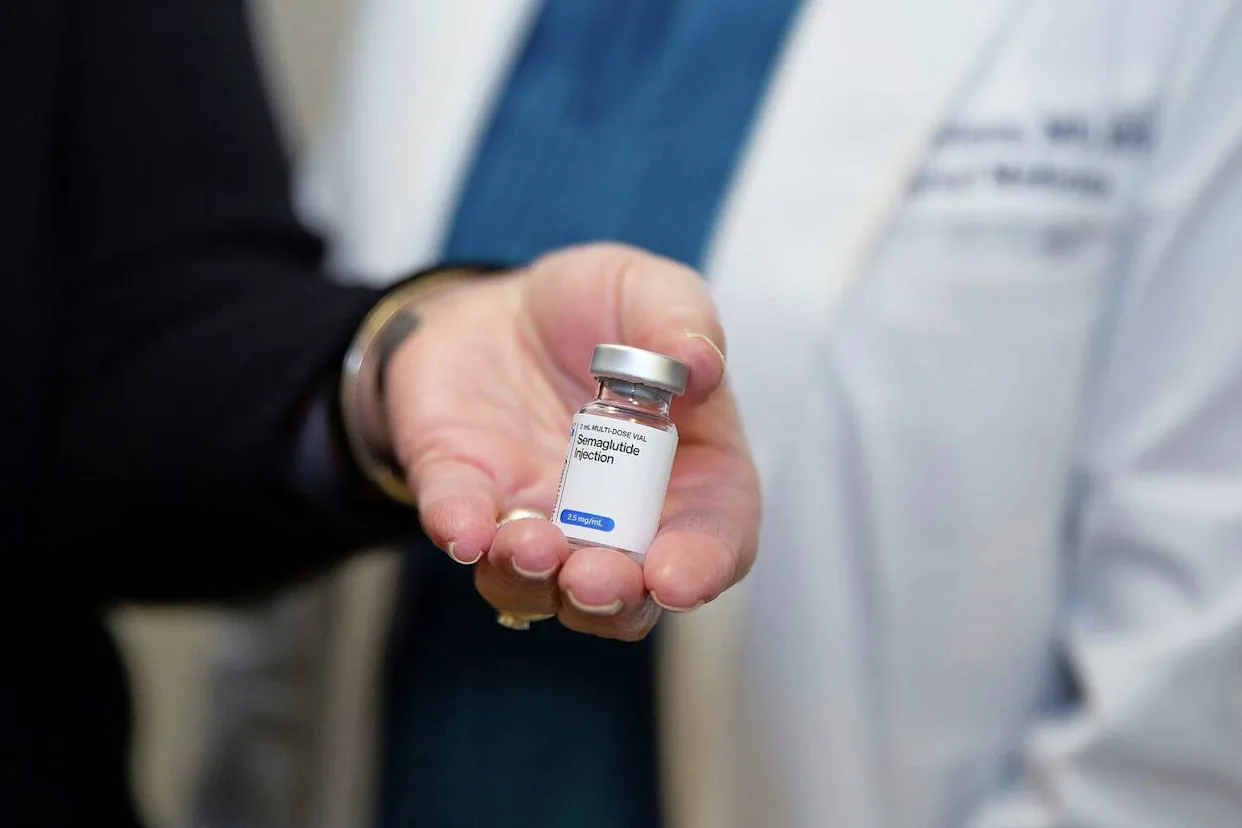
The Medicare GLP-1 Bridge is now live as of July 1, 2026. But here is the honest thing most news coverage is not telling you clearly: the program runs for exactly 18 months and ends December 31, 2027. The program designed to replace it has been delayed indefinitely. What happens to beneficiaries in January 2028 is genuinely uncertain. This guide explains why — and what you should know and do right now.
Not on the Bridge yet? You have until December 31, 2027
Beneficiaries who start now get the maximum 18 months of $50/month access. If you qualify (Medicare Part D + BMI 35+ or 30+ with a condition), enrolling now gives you until the end of 2027 — and the maximum time to benefit before the end date.
Check Bridge eligibility — full guide →Not eligible for the Bridge at all?
If you're under 65, don't meet the BMI/condition criteria, or just don't want to wait on a federal enrollment window, licensed telehealth can prescribe compounded GLP-1 therapy directly.
Compare telehealth GLP-1 pricing →The complete timeline — confirmed vs uncertain
CMS announces the Medicare GLP-1 Bridge
CMS announces the Bridge program, designed to run July–December 2026 for 6 months, followed by the BALANCE Model starting January 2027.
BALANCE Model delayed — major insurers refuse to participate
One day after the application deadline, CMS announces the Part D portion of the BALANCE Model will not launch in 2027. Major insurers declined to participate, citing an estimated $25-35 billion cost with insufficient data to price the risk. CMS simultaneously extends the Bridge from 6 months to 18 months, through December 31, 2027.
Medicare GLP-1 Bridge launches — $50/month for eligible beneficiaries
The Bridge goes live. Eligible Medicare Part D beneficiaries with BMI 35+ (or 30+ with a qualifying condition) can access Wegovy, Zepbound KwikPen, or Foundayo for $50/month through the central CMS processor. Prior authorization required from your physician.
Bridge ends — no extension announced
The Bridge program is scheduled to end. CMS has not announced any extension beyond this date. Beneficiaries will have been on treatment for up to 18 months. Clinical data shows most patients regain significant weight when GLP-1 medications are stopped.
Coverage gap — no confirmed pathway
This is the scenario KFF, AJMC, and health policy researchers have flagged explicitly: beneficiaries could lose $50/month access in January 2028 with no replacement. The BALANCE Model requires new negotiations with insurers and/or congressional action. Neither has a confirmed timeline as of today.
What is the BALANCE Model and why did it fail?
The BALANCE Model was CMS's planned mechanism to turn the temporary Bridge into something more permanent. Under BALANCE, Medicare Part D insurance plans would voluntarily agree to cover GLP-1 medications for obesity at negotiated prices — with drug manufacturers providing discounts in exchange for access to the Medicare market.
CMS set a threshold: at least 80% of Part D enrollment (meaning plans covering 80% of Medicare drug beneficiaries) had to sign up for the model to proceed. On April 20, 2026 — the application deadline — major insurers including large Medicare Advantage plans declined to participate.
Why did insurers refuse?
- Cost uncertainty — projections estimated $25-35 billion over 10 years just for Part D plans. Without real-world utilization data, insurers couldn't accurately price their risk.
- No mandate — the model was voluntary. Insurers that participated would bear costs that non-participating competitors avoided, creating a competitive disadvantage.
- Premium pressure — covering GLP-1s at scale would require significant premium increases for Medicare Advantage plans, which compete heavily on price.
- Manufacturer pricing — AHIP (insurers' trade group) publicly called on manufacturers to reduce list prices as a precondition for broader coverage.
Does this gap risk apply to you?
The Bridge doesn't apply to you — but your options are still good
The Medicare Bridge is only for Medicare Part D beneficiaries. If you have employer insurance, Marketplace coverage, or no insurance, your GLP-1 access goes through different channels. Compounded semaglutide from $99/month and compounded tirzepatide from $149/month are available without insurance through licensed telehealth platforms.
The four scenarios for 2028 — and how likely each is
| Scenario | How it happens | Likelihood | What it means for you |
|---|---|---|---|
| Bridge extended again | CMS uses existing authority to extend the demonstration into 2028 | Possible — CMS has done it once already | Your $50 copay continues. Status quo maintained. |
| BALANCE Model launches (scaled-back) | Negotiations with insurers succeed; Part D coverage begins with fewer participants | Uncertain — requires insurer buy-in CMS hasn't secured | Coverage continues but your cost may change based on your specific plan |
| Congress passes obesity coverage law | Treat and Reduce Obesity Act or similar legislation passes | Unlikely near-term — no current momentum in Congress | Permanent Part D coverage for GLP-1s — the best outcome |
| Coverage gap — no replacement | Bridge ends, BALANCE not launched, no legislation. GLP-1s become unaffordable for most beneficiaries | Real risk — KFF explicitly warns this could happen | Full retail price or compounded alternatives ($149-299/month) |
Bridge vs backup options — the real cost comparison
This is what most Medicare beneficiaries need to see clearly before the Bridge ends. Here is the full cost picture across every realistic scenario.
| Option | Monthly cost | Who it covers | Available now? |
|---|---|---|---|
| Medicare GLP-1 Bridge | $50/month | Medicare Part D + BMI 35+ (or 30+ with condition) | ✓ July 1 – Dec 31, 2027 |
| Compounded semaglutide (telehealth) | $99–169/month | Anyone who qualifies medically — no Medicare needed | ✓ Available now |
| Compounded tirzepatide (telehealth) | $149–299/month | Anyone who qualifies — stronger results than semaglutide | ✓ Available now |
| Lilly Direct (brand Zepbound vials) | $349–499/month | Self-pay, no insurance required | ✓ Available now |
| Brand Wegovy retail (no insurance) | $1,349/month | Full list price at retail pharmacy | Available but unaffordable for most |
The Bridge is live today — how to enroll right now
As of July 1, 2026, the Medicare GLP-1 Bridge is accepting prior authorization requests and filling prescriptions. Here is the exact process, in plain English, in the order you need to do it.
Confirm you're eligible — takes 2 minutes
You need: (1) Medicare Part D coverage in 2026 through a standalone PDP or a Medicare Advantage plan with drug coverage, AND (2) BMI of 35 or higher — OR BMI of 30+ with uncontrolled hypertension, chronic kidney disease, or heart failure — OR BMI of 27+ with prediabetes, peripheral artery disease, or prior heart attack or stroke. Your BMI at the time you started a GLP-1 drug counts, even if you've lost weight since.
Call your doctor — ask them to submit a Bridge prior authorization
Your physician submits a prior authorization request to the Bridge's central processor (administered by Humana) — not to your Medicare Part D plan. This is a new workflow for most physicians' offices; they may not know the process yet. Tell them the request goes to the CMS central processor, not to your regular insurance. The PA form and fax number became available July 1 at cms.gov/medicare/coverage/prescription-drug-coverage/medicare-glp-1-bridge. Once submitted, CMS says the PA can take up to 72 hours to process — plan for this, especially around holidays.
Get your prescription sent to your pharmacy
Once your prior authorization is approved, your doctor sends a prescription for Wegovy (injection or tablet), Zepbound KwikPen, or Foundayo to your pharmacy. Note: Zepbound's single-dose vials and single-dose pens are not covered by the Bridge — only the KwikPen. Pharmacies do not need to enroll in the Bridge separately — any participating pharmacy can fill it.
At the pharmacy — what to expect
Bring your Medicare card. Your pharmacy may ask for your Medicare Number (MBI) or the last 4 digits of your Social Security number. The pharmacist will process the claim using BIN 028918 and PCN MEDDGLP1BR — the Bridge's dedicated billing codes — not through your standard Part D plan. You pay $50 at the counter. This $50 does not count toward your Part D deductible or your $2,100 annual out-of-pocket maximum. Manufacturer coupons and discount cards cannot be applied to Bridge claims.
You'll receive a confirmation letter
Medicare will mail you a letter confirming your GLP-1 drug is covered under the Bridge program. Your prior authorization, once approved, covers refills and dose changes through December 31, 2027 — you don't need to reauthorize unless you switch GLP-1 medications. You can also call 1-800-MEDICARE (1-800-633-4227) to check eligibility or PA status.
2. Trying to fill Zepbound vials. Only the Zepbound KwikPen is covered. The single-dose vials and single-dose pens are explicitly excluded.
3. Applying discount cards. Manufacturer coupons, GoodRx, and savings programs cannot be applied to Bridge claims. Your cost is $50 flat, period.
What to actually do with this information — right now
Verify your prior authorization went through the Bridge — not Part D
Ask your pharmacy to confirm your GLP-1 was processed using BIN 028918 and PCN MEDDGLP1BR — the Bridge central processor codes. If it went through your standard Part D plan, you may be paying more than $50 or not be in the Bridge program at all.
Document your results quarterly with your physician
Your weight loss results and health improvements under the Bridge create a medical record of treatment effectiveness. This documentation will matter if you need to demonstrate medical necessity for future coverage under a different program — or appeal a denial.
Understand your backup option now — not in December 2027
Compounded semaglutide and tirzepatide through licensed telehealth platforms are your most affordable backup if the Bridge ends without replacement. These contain the same active molecules as brand-name Wegovy and Zepbound at 70-85% lower cost.
Watch CMS announcements in late 2026 and 2027
CMS will collect Bridge utilization data throughout the program period. Announcements about BALANCE Model restart or Bridge extension are most likely to come in the Fall of 2027 — giving beneficiaries only weeks of notice. Staying informed prevents a surprise coverage loss.
Know your backup option before you need it
If the Bridge ends without replacement in 2028, compounded semaglutide and tirzepatide through licensed telehealth are the most affordable legal alternative — same active molecules, 70-85% less than brand-name prices.
Check eligibility at DirectMeds →Not on the Bridge yet? Check if you qualify
The Bridge runs through December 31, 2027. Eligible beneficiaries who start now have access to $50/month GLP-1 coverage for up to 18 months — the maximum possible benefit from the program.
Full Medicare Bridge eligibility guide →Frequently asked questions
Medical/Legal Disclaimer: This is informational content only. Verify all Medicare program details directly with CMS.gov or 1-800-MEDICARE. Not medical or legal advice.
Advertiser Disclosure: FuturWeightLoss.com may receive compensation when you click affiliate links.
© 2026 FuturWeightLoss.com