The full cost breakdown
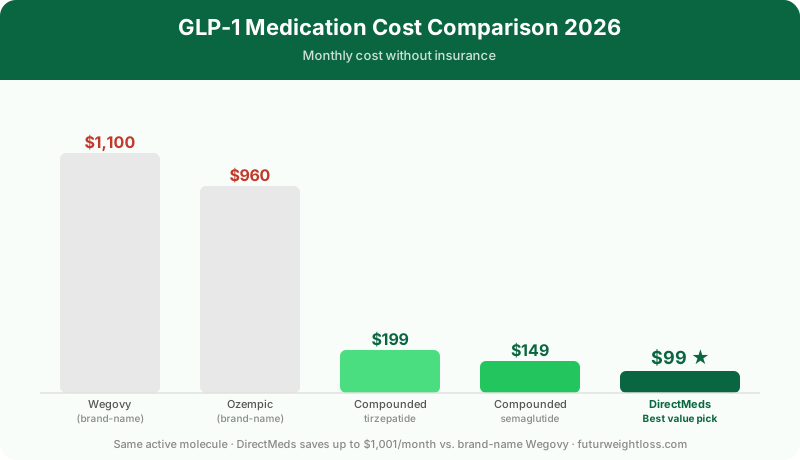
GLP-1 medications are among the most expensive drugs in the world when purchased at brand-name prices. But the telehealth compounding market has dramatically changed the access picture for most patients. Here is every pricing scenario you might encounter:
Brand-name pricing (no insurance)
| Medication | Brand name | Monthly cost (no insurance) | Annual cost |
|---|---|---|---|
| Semaglutide injection | Wegovy | $900–$1,100 | $10,800–$13,200 |
| Semaglutide (diabetes indication) | Ozempic | $800–$1,000 | $9,600–$12,000 |
| Tirzepatide injection | Zepbound | $1,000–$1,300 | $12,000–$15,600 |
| Tirzepatide (diabetes indication) | Mounjaro | $900–$1,100 | $10,800–$13,200 |
Brand-name pricing with insurance
Insurance coverage for GLP-1 weight loss medications is inconsistent and often denied. Here's what you can realistically expect:
- Employer health plans: Many plans explicitly exclude weight loss medications. Coverage varies enormously by employer and plan
- Medicare: Medicare Part D now covers Wegovy for patients with established cardiovascular disease following the SELECT trial results — but not for weight loss alone
- Medicaid: Coverage varies by state — some states cover GLP-1s, most do not for weight loss indication
- Prior authorization: Even with covered plans, most insurers require prior authorization, documentation of prior weight loss attempts, and BMI criteria — and still frequently deny claims
- With coverage: Copays typically run $25–$200/month depending on plan design
Compounded GLP-1 pricing through telehealth
| Medication | Starting dose | Maintenance dose | Platform |
|---|---|---|---|
| Compounded semaglutide | ~$99–$149/mo | ~$149–$249/mo | DirectMeds |
| Compounded tirzepatide | ~$149–$199/mo | ~$199–$299/mo | DirectMeds |
These prices include the physician consultation, ongoing monitoring, and provider access — not just the medication itself. The all-in monthly cost is what makes compounded telehealth the most realistic access route for the majority of patients.
Why is there such a huge price difference?
Brand-name GLP-1 medications carry significant research and development costs, manufacturing costs, and — critically — substantial manufacturer profit margins. Novo Nordisk (Wegovy/Ozempic) and Eli Lilly (Zepbound/Mounjaro) have priced these medications at a level that reflects their blockbuster commercial potential, not just their production cost.
Compounded versions use the same active molecules but are produced by licensed compounding pharmacies rather than the original manufacturers. Compounding pharmacies don't carry the same R&D overhead, operate at lower margins, and can produce the active ingredient at a fraction of brand-name cost. The trade-off: compounded medications are not FDA-approved finished drug products, though they use FDA-approved active ingredients and operate under regulatory oversight.
Hidden costs to watch for
Not all telehealth GLP-1 programs price everything into their advertised monthly cost. Watch for these:
- Consultation fees: Some platforms charge a separate consultation fee ($50–$150) on top of medication cost — the best platforms include this
- Lab work: Some providers require or recommend baseline bloodwork ($50–$200) before prescribing — not always included
- Shipping: Typically $10–$20/month unless included in program cost
- Supplies: Syringes and injection supplies are usually included with injectable medications but worth confirming
- Cancellation policies: Some programs lock you into multi-month commitments — read the terms before subscribing
What you actually get for the money
At $99–$249/month for compounded semaglutide through a reputable telehealth platform, here's what a quality program includes:
- Initial physician consultation and medical review
- Personalized prescription with appropriate starting dose and titration schedule
- Monthly medication supply from an licensed compounding pharmacy
- Injection supplies (for injectable formulations)
- Ongoing provider access for questions, side effect management, dose adjustment
- Regular check-ins to monitor progress
Compare this to a traditional obesity medicine specialist visit — typically $200–$400 per appointment, not including the cost of brand-name medication. The telehealth compounding model delivers equivalent or better ongoing care at dramatically lower total cost.
Is the cheapest option always the best?
No — and this is important. The GLP-1 telehealth space has attracted some operators prioritizing low prices over clinical quality. Red flags to watch for:
- No real physician involved in the prescription decision
- Automated approval without any meaningful health screening
- No ongoing monitoring or provider access after the initial prescription
- Compounding pharmacy not clearly identified or not FDA-regulated
- Prices that seem impossibly low (under $60/month for a full program)
The platforms we recommend — starting with DirectMeds — pass all of these checks. The small price premium over the cheapest available options is worth it for the clinical quality and safety it buys you.
Start with a free eligibility check
DirectMeds offers compounded semaglutide from ~$99/month with real physician oversight. The eligibility check is free and takes under 10 minutes.
Check eligibility at DirectMeds — free →