The honest reality of GLP-1 insurance coverage in 2026
Coverage for GLP-1 medications is genuinely expanding — but the reality is still frustrating for most people. Starting July 1, 2026, Medicare beneficiaries who meet specific BMI and clinical criteria can access Wegovy or Zepbound for a flat $50/month copay through the new Medicare GLP-1 Bridge program — a major change from previous years. Many employer health plans still explicitly exclude weight loss medications. Medicaid coverage varies dramatically by state. When coverage does exist, prior authorization requirements are common and frequently result in initial denials.
That said, coverage is more attainable than many patients realize — particularly for Ozempic (the diabetes-approved version) if you have type 2 diabetes or prediabetes. Here's the actual process.
Step 1 — Know which drug to pursue and why
Insurance strategy is different depending on your situation:
- Have type 2 diabetes: Pursue Ozempic (diabetes indication) — covered by most commercial insurance and many Medicaid plans. Prior auth usually required but approvable with diagnosis documentation.
- Have prediabetes or cardiovascular disease: Wegovy or Ozempic may be coverable — coverage has expanded post-SELECT trial (cardiovascular benefit data). Your cardiologist's involvement strengthens the case.
- Obesity only, no comorbidities: Wegovy coverage is patchy. Employer plans vary enormously. Worth trying but have a backup plan.
- Medicare patient: Ozempic is covered for a diabetes diagnosis. Starting July 1, 2026, Wegovy or Zepbound may be covered for $50/month for weight loss if you meet BMI/clinical criteria under the new Medicare GLP-1 Bridge program — check eligibility before assuming you have no coverage option.
Step 2 — Get prior authorization from your doctor
Prior authorization (PA) is the process where your doctor submits documentation to your insurance justifying the prescription. For GLP-1 medications, PA typically requires:
- Your diagnosis (diabetes, obesity, cardiovascular disease)
- BMI documentation
- Evidence that other treatments were tried and failed (often required — diet counseling, other medications)
- Clinical notes supporting medical necessity
Ask your doctor to initiate the PA process. Be specific: request that they document your BMI, any qualifying comorbidities, and prior weight loss attempts in the PA submission.
Step 3 — If denied, appeal immediately
Initial PA denials are extremely common and frequently overturned on appeal. The appeals process is worth pursuing:
- First-level appeal: Submit a formal written appeal with your doctor's supporting letter, clinical notes, and any relevant lab work. Ask your doctor to write a letter of medical necessity — these dramatically improve appeal success rates
- Peer-to-peer review: Request that your doctor speak directly with the insurance company's medical reviewer. Physician-to-physician conversations overturn more denials than written appeals alone
- Second-level appeal / external review: If the internal appeal fails, you have the right to an independent external review in most states — a third-party medical reviewer assesses the decision
Step 4 — Manufacturer savings programs
If you have commercial insurance (not Medicare or Medicaid), Novo Nordisk's savings card can reduce Wegovy or Ozempic to as low as $25/month for eligible patients. This stacks on top of insurance — or works independently for patients with commercial insurance who aren't getting coverage. Check NovoCare at novocare.com.
The backup plan: compounded semaglutide
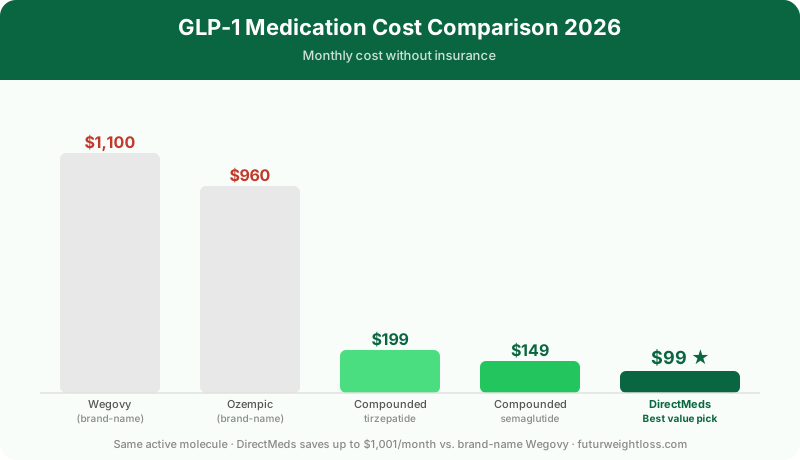
If insurance coverage proves impossible, compounded semaglutide through telehealth is the practical alternative. Same active molecule, same clinical outcomes, $99–$249/month versus $960–$1,100/month brand-name. For patients without viable insurance coverage, this is the real solution — not spending months fighting coverage battles.
Skip the insurance battle entirely
Compounded semaglutide through DirectMeds — same active molecule as Ozempic, from $99/month. No insurance required, no prior auth, no denials.
Check eligibility at DirectMeds →