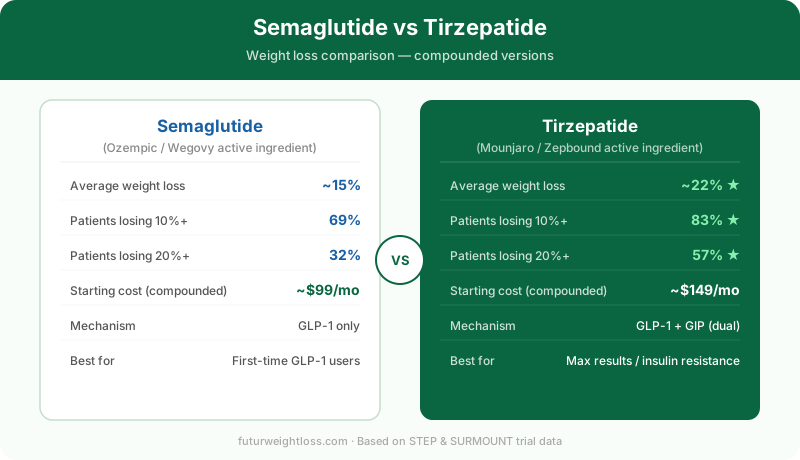
The short answer: Mounjaro wins on weight loss, Ozempic wins on established data
Mounjaro (tirzepatide) produces approximately 20–22% body weight loss in clinical trials. Ozempic (semaglutide) produces approximately 12–15%. The difference is real and clinically significant — but Ozempic has more years of post-market safety data. For patients whose primary goal is maximum weight loss, Mounjaro has the stronger evidence. For patients who want the most established track record, Ozempic has been used by more people for longer.
| Factor | Ozempic (semaglutide) | Mounjaro (tirzepatide) |
|---|---|---|
| Active ingredient | Semaglutide | Tirzepatide |
| Mechanism | GLP-1 receptor agonist | Dual GLP-1 + GIP receptor agonist |
| Primary approval | Type 2 diabetes | Type 2 diabetes |
| Weight loss approval | Wegovy (2.4mg version) | Zepbound (weight loss version) |
| Average weight loss | ~12–15% body weight | ~20–22% body weight |
| Patients losing 20%+ | ~32% | ~57% |
| Nausea rates | ~44% | Slightly lower for some patients |
| Brand-name cost | ~$960/mo (Ozempic) | ~$1,050/mo (Mounjaro) |
| Compounded cost | From ~$99/mo | From ~$149/mo |
| Years of market data | More established | Growing rapidly |
| Cardiovascular data | SELECT trial — strong | Evidence growing |
Why Mounjaro produces more weight loss
Mounjaro activates both GLP-1 and GIP receptors. Ozempic activates only GLP-1. GIP is a gut hormone involved in fat metabolism and insulin signaling through pathways that don't overlap with GLP-1. Activating both pathways simultaneously produces additive — possibly synergistic — effects on appetite suppression and fat metabolism that semaglutide's single mechanism can't match.
Who should choose Ozempic/semaglutide
- First-time GLP-1 users — start with the more established medication and step up if needed
- Patients where cost is a primary concern — compounded semaglutide starts ~$50/month cheaper
- Patients with established cardiovascular disease — semaglutide's cardiovascular data (SELECT trial) is more extensive
- Patients whose insurance covers Ozempic for diabetes
Who should choose Mounjaro/tirzepatide
- Patients wanting maximum weight loss — 20%+ average is meaningfully better than 15%
- Patients with significant insulin resistance, PCOS, or type 2 diabetes
- Patients who plateaued on semaglutide — switching frequently restarts progress
- Perimenopausal/menopausal women — GIP component addresses insulin resistance that increases with estrogen decline
Access both semaglutide and tirzepatide
DirectMeds offers both compounded semaglutide and tirzepatide — your physician determines which is right for you. From ~$99/month.
Check eligibility at DirectMeds →