Why this comparison matters specifically for women
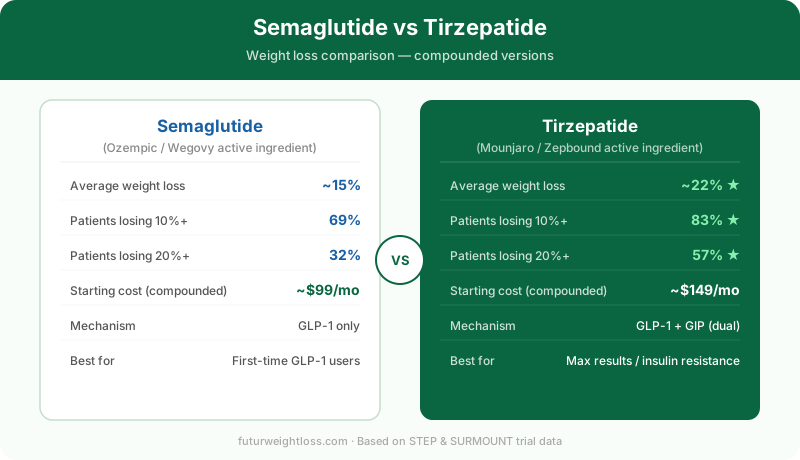
The headline numbers — tirzepatide produces more weight loss — are true but incomplete for women. Women's metabolic response to GLP-1 medications is shaped by hormonal factors that don't affect men. The right choice between these two medications depends significantly on where you are in your hormonal life stage and what's driving your weight gain.
The hormonal context that changes this comparison
Estrogen influences GLP-1 receptor sensitivity. As estrogen declines through perimenopause and menopause, insulin resistance increases — which is exactly where tirzepatide's GIP component provides additional benefit. Women with significant insulin resistance (common in perimenopause) tend to show stronger differential response to tirzepatide versus semaglutide. For younger women without significant insulin resistance, the difference is smaller.
Clinical trial data — women specifically
The STEP and SURMOUNT trials both included significant proportions of women, allowing for analysis of sex-specific outcomes:
| Metric | Semaglutide (women) | Tirzepatide (women) |
|---|---|---|
| Average weight loss | ~14–16% body weight | ~21–24% body weight |
| Losing 20%+ of body weight | ~30% of women | ~55–60% of women |
| Insulin sensitivity improvement | Significant | Greater — especially with insulin resistance |
| Nausea rates in women | Higher than men (~48%) | Slightly lower than semaglutide |
| Starting cost (compounded) | ~$99/mo | ~$149/mo |
| Long-term data | More established | Growing rapidly |
Semaglutide for women — who it works best for
Semaglutide remains an excellent choice for many women and is typically the recommended starting point because of its established track record, lower cost, and strong efficacy for most patients. It works especially well for:
- Women without significant insulin resistance: The GIP component of tirzepatide's advantage is most pronounced where insulin resistance is significant. In women with normal insulin function, semaglutide performs nearly as well
- Younger premenopausal women: Estrogen's protective effects on insulin sensitivity mean many younger women respond excellently to semaglutide's single mechanism
- Cost-conscious patients: At $99–$199/month versus $149–$299/month for tirzepatide, semaglutide is meaningfully more affordable for equivalent efficacy in many patients
- First-time GLP-1 users: Starting with semaglutide and stepping up to tirzepatide if needed is the most common clinical approach
Tirzepatide for women — who it works best for
Tirzepatide's dual mechanism provides advantages in specific situations that are particularly relevant to women:
- Perimenopausal and menopausal women: The combination of declining estrogen, increasing insulin resistance, and abdominal fat redistribution that characterizes this life stage is exactly where tirzepatide's GIP component adds meaningful benefit
- Women with PCOS: Polycystic ovary syndrome involves significant insulin resistance — tirzepatide's GIP mechanism provides additional metabolic benefit beyond appetite suppression
- Women with type 2 diabetes or prediabetes: Tirzepatide's superior blood sugar control alongside weight loss makes it the preferred choice for metabolically compromised patients
- Women who plateaued on semaglutide: Many women who achieved good initial results on semaglutide and then plateaued see renewed progress after switching to tirzepatide
- Women wanting maximum weight loss: For women whose primary goal is losing the most weight possible, tirzepatide's stronger average outcomes make it the clinical preference
Side effects — how do they differ in women?
Women generally report higher rates of GI side effects than men on both medications — nausea in particular. This appears related to estrogen's effects on gastric motility. Key differences between the two medications in women:
- Nausea: Both cause nausea, but tirzepatide may cause slightly less nausea than semaglutide at comparable doses in women — a meaningful practical advantage given higher baseline GI sensitivity in women
- Menstrual cycle effects: Both medications can cause temporary menstrual irregularities during rapid weight loss. This typically normalizes within a few cycles and is more related to weight loss itself than the specific medication
- Hair loss (telogen effluvium): Both medications are associated with temporary hair thinning related to rapid weight loss — not a direct drug effect. This is common in women losing weight rapidly and typically resolves within 6 months
- Pregnancy: Neither medication is appropriate during pregnancy or while trying to conceive. Adequate contraception is essential for women of childbearing age on either medication
The hormonal complement: combining GLP-1 with hormone support
For many women — particularly those in perimenopause or menopause — GLP-1 therapy addresses appetite and metabolism but doesn't fully address the hormonal drivers of weight gain. Combining GLP-1 medication with a women's health platform like FemExcel that addresses estrogen, progesterone, and thyroid function can produce meaningfully better results than either approach alone.
This isn't an either/or decision — it's a both/and opportunity for women whose weight gain has a significant hormonal component.
Which should you choose?
For most women starting GLP-1 therapy for the first time, semaglutide is the pragmatic starting point — lower cost, excellent efficacy for most patients, and the most established safety profile. If you're specifically in perimenopause or have significant insulin resistance, your provider may recommend starting with tirzepatide instead.
If you start on semaglutide and achieve less than 8–10% weight loss after 4–6 months at therapeutic doses, discuss switching to tirzepatide with your provider. It frequently produces renewed progress in patients who've plateaued.
Ready to find out which is right for you?
A licensed DirectMeds physician will review your health history — including hormonal factors — and recommend the right GLP-1 medication for your situation. Free eligibility check.
Check your eligibility at DirectMeds →