The clinical trial numbers
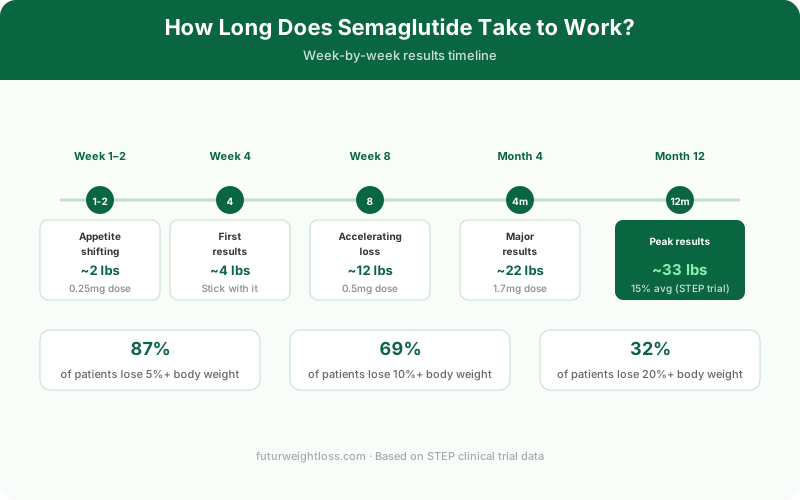
The STEP trial program — the most comprehensive clinical evidence for semaglutide's weight loss effects — enrolled thousands of patients across multiple countries over 68 weeks. These are the headline results:
What 15% body weight looks like in real numbers
Real patient results — what people actually report
Patient-reported outcomes on compounded semaglutide through telehealth are consistent with clinical trial data. Common reports from patients who reach and maintain therapeutic doses:
- Month 1 (titration phase): 3–8 lbs for most patients. Appetite changes noticeable but weight loss modest — you're still on a low starting dose
- Months 2–3: 10–18 lbs total for many patients as doses increase and appetite suppression strengthens
- Months 4–6: 20–30 lbs total for patients at or near therapeutic dose. This is where the "wow" moment happens for most people
- Months 6–12: 30–50+ lbs for strong responders maintaining the 2.4mg dose. Some patients plateau; others continue losing
- Beyond 12 months: Most patients shift to maintenance. Some continue losing slowly at a rate of 1–3 lbs/month
Why results vary so much — the honest explanation
Semaglutide is not a fixed-result intervention. Patient outcomes vary significantly based on factors your provider can help you understand and address:
- Starting BMI: Higher starting BMI generally means more total pounds lost (though the percentage tends to be similar across the population)
- Insulin resistance: Patients with significant insulin resistance — common with prediabetes, metabolic syndrome, and in perimenopausal women — sometimes respond less strongly to semaglutide. Tirzepatide's additional GIP mechanism often works better here
- Dose titration speed: Patients who tolerate faster titration to higher doses reach therapeutic levels sooner and see faster results. Patients with significant GI side effects may need slower titration
- Diet quality: Semaglutide produces appetite suppression but doesn't override dietary choices. Patients who eat more protein and less processed food consistently outperform those who don't change their diet
- Sleep quality: Poor sleep elevates cortisol, which promotes fat storage and counteracts GLP-1's effects. Addressing sleep apnea (which weight loss often resolves) creates a positive feedback loop
- Exercise: Resistance training during GLP-1 therapy preserves muscle mass and improves body composition outcomes even when total weight loss is similar
- Hormonal factors (women): Perimenopausal hormonal changes affect how women respond to GLP-1 therapy. See our women's GLP-1 guide for details
Tirzepatide results vs semaglutide
For patients who want to maximize weight loss, tirzepatide consistently outperforms semaglutide. The SURMOUNT trials showed average weight loss of 20–22% at the highest dose — approximately 5–7 percentage points better than semaglutide. About 57% of tirzepatide patients lose 20% or more of body weight, versus 32% on semaglutide.
The trade-off: tirzepatide costs about $50–$100/month more than compounded semaglutide. For patients who can absorb the higher cost or who have specific risk factors (insulin resistance, PCOS, prediabetes) where tirzepatide has a clear advantage, it's worth considering as the starting medication. See our full comparison.
What happens to results when you stop
The STEP 4 withdrawal trial is unambiguous on this: most patients regain the majority of lost weight within 12–18 months of stopping semaglutide. Average weight regain was about two-thirds of what was lost within one year. This isn't a failure of the medication — it's a reflection of the biology of obesity. The hunger hormones that semaglutide suppresses return to baseline when the medication stops.
This is why most obesity medicine specialists now view GLP-1 therapy as a long-term or indefinite treatment for appropriate candidates — not a temporary intervention with a defined endpoint.
Start your semaglutide journey
DirectMeds — real physician oversight, compounded semaglutide from ~$99/month. Free eligibility check.
Check eligibility at DirectMeds →